
Website BuildersTutorial
A chart needs more than a label saying chart. Explain the question, trend and uncertainty, provide usable values, and keep filters and descriptions synchronized.
Website BuildersTutorial
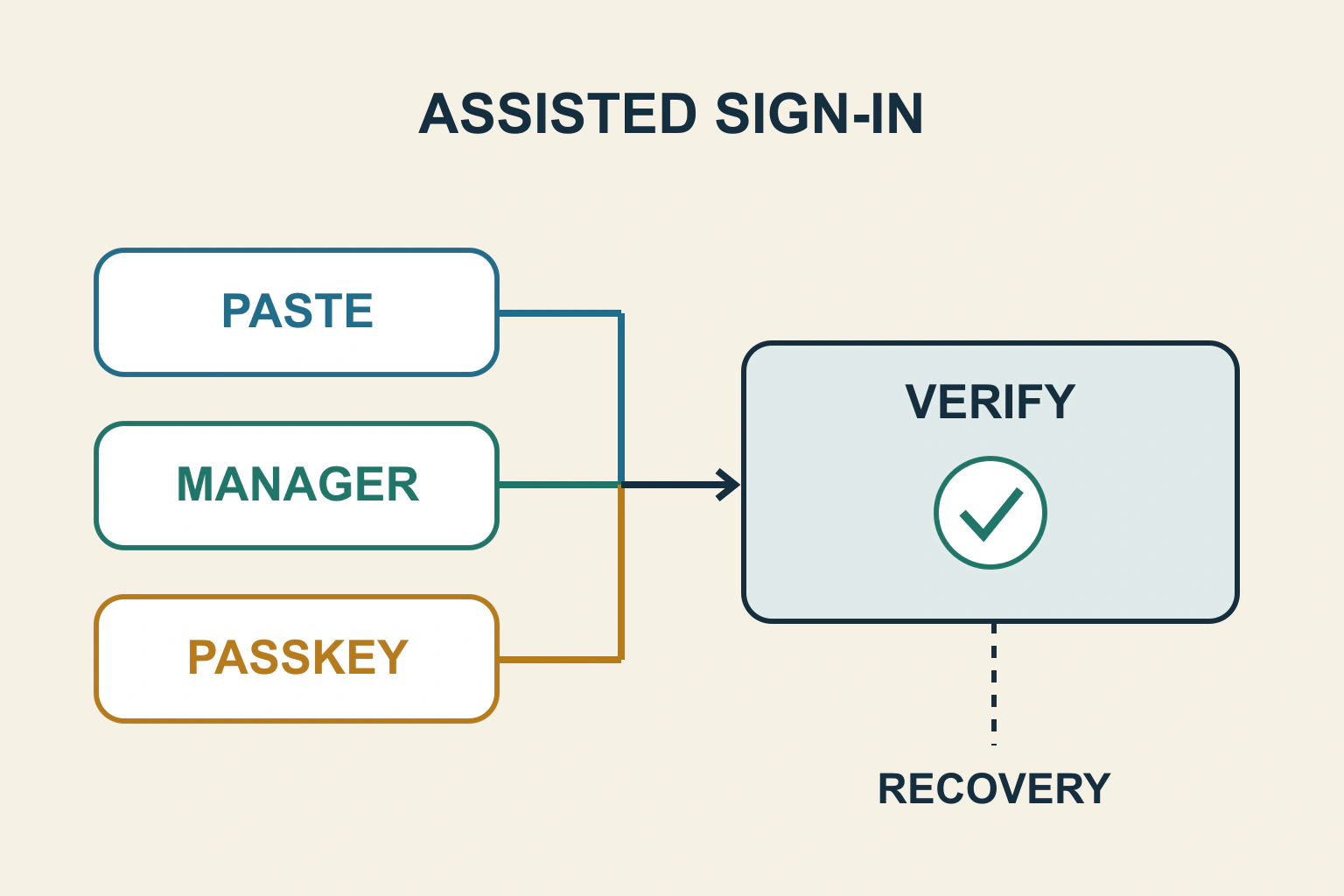
Remove unnecessary memory and transcription barriers from sign-in. Support pasting and password managers, evaluate passkeys with a complete fallback, and verify every authentication step.

Website BuildersTutorial
An open WebSocket does not prove subscriptions or missed data recovered. Reauthenticate, confirm the supported subscription/resume protocol and reconcile the current view.

Security & BackupsExplainer
Saved content is still untrusted when rendered. Separate plain text, rich HTML, links and other output contexts, then review every place the stored value is displayed.

Security & BackupsTutorial
Use parameterized queries for data values and deliberate allowlists for query structure. Review the actual database boundary rather than relying on a plugin label or scanner result.

Security & BackupsTutorial
Review a security warning through an independently known account route. Compare the actual activity and protect access without treating an authenticated sender as proof of a safe request.

Security & BackupsExplainer
A form can look valid while its request protection is stale or mismatched. Trace the current session, token, origin and actual server result without disabling CSRF defenses.

Website BuildersTutorial
A parsed JSON object can look right while its original bytes no longer match a webhook signature. Check the sender’s signed material, raw-body path, clock rules and secret version.

Security & BackupsTutorial
An integrity hash approves specific script bytes. Plan the version, CORS support and hash update together so an intended supplier update does not silently break your website.

Security & BackupsTutorial
Separate a connected app’s data permission, sign-in link and existing session. Revoke the intended access and check what happens to data already copied.

Security & BackupsExplainer
CORS controls browser response sharing, not ownership of account data. Authenticate callers and check each object and action at the server, including nonbrowser requests.

Security & BackupsTutorial
A signed download URL is temporary access, not the file’s public address. Recheck entitlement, issue a fresh scoped link and keep cached or saved copies in the threat model.
