 Pagember

You do not need a technical specification to ask for a website quote. Prepare a short description of who the website is for, what those people need to do, what content you already have and which functions matter. Say where you need advice instead of filling gaps with guesses.
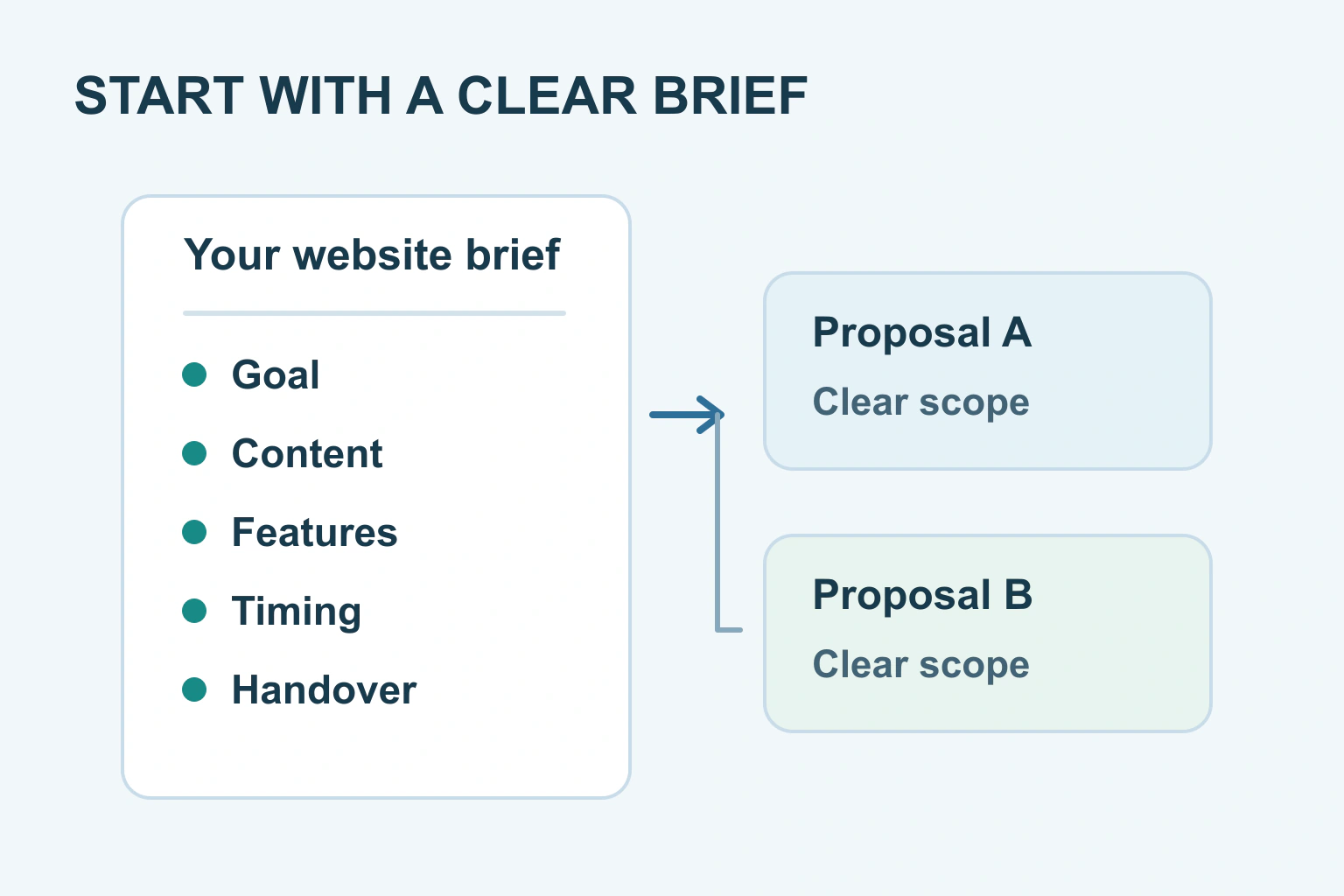
A useful brief makes proposals easier to compare. Without one, the cheapest quote might cover a few prepared pages while another includes writing, photography, bookings and ongoing care. The difference may be scope rather than value.
Describe the job the website should do
Start with a plain sentence: people should be able to understand my classes and ask about a place. Then list the essential steps: see the timetable, check the location, understand the cost and send an inquiry. This explains more than asking for a modern website with excellent search optimization.
GOV.UK's user-needs guidance recommends starting with the person's problem rather than a chosen solution. Applied to your brief, that means explaining the booking problem before prescribing a particular booking app. A designer can then suggest a suitable approach.
Name the audience without inventing a detailed marketing persona. Are they local parents, existing customers, first-time buyers or people comparing a specialist service? Include what you know from genuine inquiries. Mark assumptions as questions the project should help answer.
Take stock of content and account ownership
Make a list of the text, photographs, logo files, documents and existing pages available. Separate ready-to-use material from drafts and missing items. Confirm you have permission for images and testimonials. A picture found online should not be described as an asset the designer is free to reuse.
Tell the supplier who is expected to write the final copy, choose photographs and upload content. If you have ten service pages but only two are written, mention that. Content preparation can affect timing just as much as building the layout.
List the domain and current hosting provider if a site exists. Share names and ownership details at first, not passwords. Our domain-account ownership guide explains why the business should retain control even when another person handles the build.
Separate essential features from later ideas
Write down what each feature needs to accomplish. An inquiry form, an appointment request and a confirmed paid booking are different jobs. If you say booking system, explain whether customers choose a time, pay, receive a confirmation and change their reservation.
| Item in the brief | Useful detail to provide | Question for the supplier |
|---|---|---|
| Contact | Inquiries go to one business inbox | What happens after a visitor sends a message? |
| Bookings | Staff must approve requested dates | Is this a request or an instant confirmed booking? |
| Content | Six pages, three still need writing | Who finishes and uploads them? |
| Updates | The owner will change a monthly timetable | Is training and an editable timetable included? |
| Existing site | Some current addresses receive inquiries | How will useful old links be handled? |
Label items essential for launch, useful later or only under consideration. This helps a supplier offer a smaller first phase without quietly removing a function you depend on. Ask them to identify exclusions in writing so you can decide whether they are acceptable.
Be clear about budget and deadlines
If you have a budget range, explain whether it covers only the build or also text, photography, hosting and subscriptions. A budget is useful context. It is not a substitute for an itemized proposal explaining what you receive.
For a deadline, state the reason. A fixed exhibition opening is different from a preferred launch month. Tell the supplier when you can approve content and provide missing material. Ask what could change the schedule and who must respond at each stage.
Suppliers use package, estimate and quote for different commitments. A package is a fixed bundle with set limits, an estimate is an informed guess that can change, and a quote is normally a firm price for an agreed scope. Ask which price is fixed, which items are allowances and how extra work is approved. Do not assume that every future revision is included.
If the quotes are above your budget
The same brief works for building the first version yourself. Webnode suits a small site built from a template with hosting included. CodeDesign generates a first draft from a description of the business; our CodeDesign brief-to-launch guide shows how to feed it a clear brief. If you want WordPress, Elementor gives you a visual editor, and the Elementor One workflow follows a brief through to handover. You can still hire a supplier later for the parts that need specialist work, such as bookings or copywriting.
Ask about the life of the website after launch
business.gov.au's website-planning guide includes hosting, content and website structure. These are separate decisions even when one supplier bundles them. Ask for a clear list of recurring services, who pays them and what happens if you change supplier later.
Specify the updates you expect to make yourself. Ask for the relevant editor access, a short handover and instructions matched to your site. Also ask who handles software updates, backups and recovery where these apply. Receiving a live link does not answer those questions.
Include accessibility in the brief from the start. W3C's planning resources explain the value of assigning responsibilities and involving users. Ask what accessibility work and testing the proposal includes. A vague statement that the template is accessible does not establish that your finished site will meet its requirements.
A hypothetical brief that gives a designer something useful
Example brief to adapt: a local repair business. The business and requirements below are hypothetical. The owner can send this type of brief to each supplier, then ask the supplier to price and explain the same scope.
| Brief field | Filled requirement | What the proposal should state |
|---|---|---|
| Audience and outcome | Local customers need to identify a suitable repair and request an assessment. Staff confirm whether work can be accepted. | How the service descriptions and assessment request will work; no implied instant booking. |
| Launch content | Six pages: Home, four service pages and Contact. The owner supplies a logo and ten photographs she owns; the service copy still needs writing. | Who writes, approves and uploads each page, and how much revision is included. |
| Essential launch functions | A request reaches the business inbox; a visitor can use the phone contact; the owner can update opening hours. | The form fields and delivery check, mobile testing, and the relevant editor handover. |
| Later ideas and exclusions | Online payments, stock tracking and customer accounts are not needed for launch. | Price these separately if proposed; do not quietly include subscriptions the owner has not chosen. |
| Approvals and timing | The shop opening is the target. The owner reviews drafts each Friday; opening date and content deadline must be agreed before promising launch. | A schedule showing what depends on content, supplier work and owner approval. |
| Ownership and ongoing work | The business keeps domain ownership. It needs the editable site, originals and a named route for updates, backups and recovery. | One-off work, recurring charges, license ownership, access and support responsibilities shown separately. |
Copy this outline into your own brief:
Business and audience:
Main task visitors must complete:
Launch pages and who writes each one:
Material I already own (logo, photos, documents):
Essential launch functions:
Later ideas (price separately):
Budget range and what it should cover:
Deadline and the reason for it:
Domain and hosting I already have:
Updates I will make myself:
Questions I need advice on:
Acceptance questions for the quote: Will the supplier demonstrate a harmless test inquiry arriving in the intended inbox, check the phone layout, and show the owner how to change opening hours? What evidence and handover are included?
The owner can now compare two proposals line by line. If one includes copywriting and the other expects finished copy, that difference must be resolved before comparing their totals. Unanswered items stay on a short questions list instead of becoming assumptions about what the price includes.
Send the same brief and compare the same scope
If you are unsure how many pages to ask for, plan that first with our guide to choosing one page or several. Keep the brief to a readable document and a folder of relevant examples. For each example website, say what you like: the clear timetable, the project photographs or the contact route. Asking for an exact copy creates different problems from asking for a useful pattern.
- Write the audience and main task.
- List launch content and who will provide it.
- Separate essential features from later ideas.
- State the budget scope and meaningful deadline.
- Ask for ongoing costs, ownership, testing and handover.
- Compare written inclusions and exclusions before accepting.
If the supplier asks you to fill in a form, our quote-request form guide explains the information a business might reasonably need at first contact. Some suppliers also publish a price calculator; treat its result as an estimate until the scope is agreed. Your next step is a shared brief both sides understand, with uncertain items clearly listed for discussion.