
Collect the reader task and evidence first, group questions by the answer required, then create a genuinely distinct guide or improve an existing one.
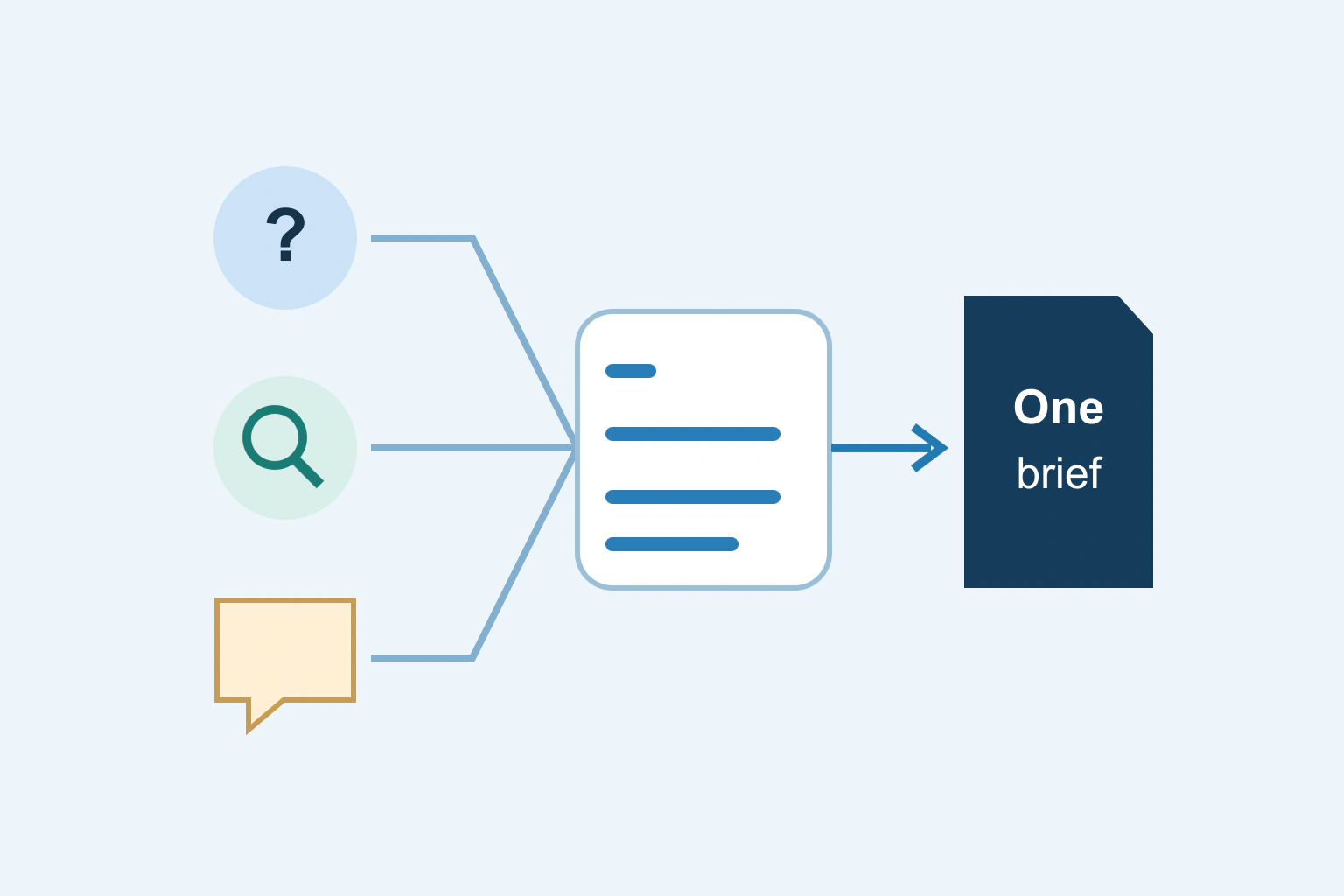
You can find useful article questions without buying a keyword subscription. Begin with the problems your intended readers actually face, collect evidence of their wording and compare the required answer with what your site already provides. A spreadsheet of phrases is a starting point, not an editorial strategy.
The useful output is a set of defensible briefs. Each should state who needs the answer, what they will accomplish, why an existing page cannot already serve them and which facts require verification.
Choose an audience you can genuinely help
Define a practical boundary before collecting topics. A website-maintenance publication might help small businesses operate domains, content, stores and email. A viral celebrity question may attract attention elsewhere but offer little reason for that publication’s readers to trust or return to it.
Write audience tasks in ordinary language: compare an invoice with the real account, choose the appropriate page format, understand a failed order or make a form easier to complete. These tasks guide discovery without presuming that a particular product is the answer.
Google’s SEO Starter Guide recognizes that readers use different words for related needs. One clear resource can answer several phrasings of the same question. A new spelling is not automatically a new article opportunity.
Collect questions with their surrounding context
Review support enquiries you are authorized to use, presales questions, appropriate internal-search evidence and relevant public discussions. Record why the person asked now, what they already tried and which decision remained blocked. Context separates a useful problem from an isolated phrase.
Handle private material through the business’s approved process. A research note can describe a recurring misunderstanding without preserving names, order references or message text. Do not publish a customer’s support history as an apparently fictional example.
Public discussions are leads for research, not automatic factual authorities. A popular answer can be outdated or specific to another software version. Read the current primary documentation behind the proposed explanation before putting it into a guide.
Use the site’s search evidence without overstating it
Search Console’s Performance report provides query and page groupings for the chosen property and period. Look for wording that suggests a gap between the visitor’s task and the destination already appearing.
A query leading to a broad email introduction may reveal a more specific need about receipts and campaigns. Read the existing answer first. The gap might need a clearer paragraph, a better navigation link or a genuinely separate operational guide.
For a new site, mark limited data as limited. An empty report does not prove nobody needs the answer. Our Search Console diagnosis explains report context; you do not need to manufacture a traffic trend to justify a useful customer-support resource.
Separate a trend from an absolute demand figure
Google’s Trends data FAQ explains sampled and normalized interest. A peak is relative to the selected comparison, time and geography. It is not a monthly search-volume count. Check whether you selected a term or topic before comparing results.
A discussion around a platform change can be useful when readers need the actual consequence explained. Record the announcement date, affected feature and supported action. Avoid a generic year-stamped article that adds no answer beyond the headline.
Ask whether the question stays useful after the announcement. A guide explaining what changed, who is affected and how to check can merit publication. An unconfirmed promise about a future feature should remain in the research queue.
Group questions by the answer they require
Different wording may require the same diagnostic process. Similar wording may conceal different decisions. Group the task rather than relying only on shared nouns. The following examples are an editorial classification exercise, not measurements of demand.
| Collected question | Underlying job | Likely treatment |
|---|---|---|
| My form sent twice; should I retry? | Understand acceptance and uncertain retries | One connected diagnostic guide |
| Which details belong in a quote form? | Choose qualification fields | Distinct design workflow |
| Where did the form email go? | Trace notification delivery | Distinct delivery investigation |
| Which form is best? | Undefined buying decision | Clarify requirements before comparing |
Give every proposed group one sentence describing the completed reader job. If it matches an existing guide’s job, inspect whether that guide should be improved instead of producing another URL.
Read the nearest existing answers before commissioning
Search titles, summaries and full bodies. Read the closest pages section by section and list the distinct information your proposal adds. Changing an example or headline can improve an existing answer without creating a separate intent.
The content-audit workflow explains when to refresh or consolidate. Use it to prevent several shallow versions of one explanation. A new guide is justified by a different decision, evidence chain or process, not merely another keyword combination.
Check whether readers can find an answer already published. Our site-search guide addresses that layer. Poor discovery is not automatically a shortage of articles, and an improved link can be more useful than another near-duplicate.
Turn the strongest questions into reviewable briefs
Record audience fit, evidence source, practical consequence, overlap, authoritative sources, worked example and maintenance burden. A question with uncertain search demand can still be valuable when it repeatedly blocks a real task.
Choose a manageable set of distinct briefs. Require a direct opening answer, the exceptions that change it and a description of success. For a suspicious renewal bill, success is verifying the actual supplier and renewal requirement, not recognizing a familiar-looking logo.
Keep unsupported ideas separate. It is acceptable to discover that a tempting topic has no defensible answer or is already covered. That is useful editorial filtering rather than a reason to invent certainty.
Learn after publication without reducing value to traffic
Review relevant search visibility, measured visits and reader feedback using comparable periods. Record corrections and new questions. A useful support reference can help customers before it attracts meaningful search traffic.
Continue adding topics while each earns a distinct reader job. Accessible research works as a disciplined habit: listen, verify, compare, explain and maintain. A paid tool can add evidence, but it cannot make those decisions for the publication.
Sources and verification
Editorial review 2026-10-18. Source check dates are recorded separately. Notes describe what each source supports and its limits.
View sources
- Google: Search Console Performance reportChecked Query and page dimensions describe measured site visibility and clicks.
Limits: Not a census of all demand; missing queries do not establish zero interest. - Google Trends: Data FAQChecked Trends uses sampled and normalized relative interest.
Limits: Values are not absolute monthly search volumes. - Google: SEO Starter GuideChecked Readers use different vocabulary; original useful content and clear organization matter.
Limits: No traffic guarantee, preferred word count or requirement to repeat each phrase.