
Explain a problem in an article, establish provider fit on a service page, and present an exact buyable offer on a product page. Connect them when the journey needs each.
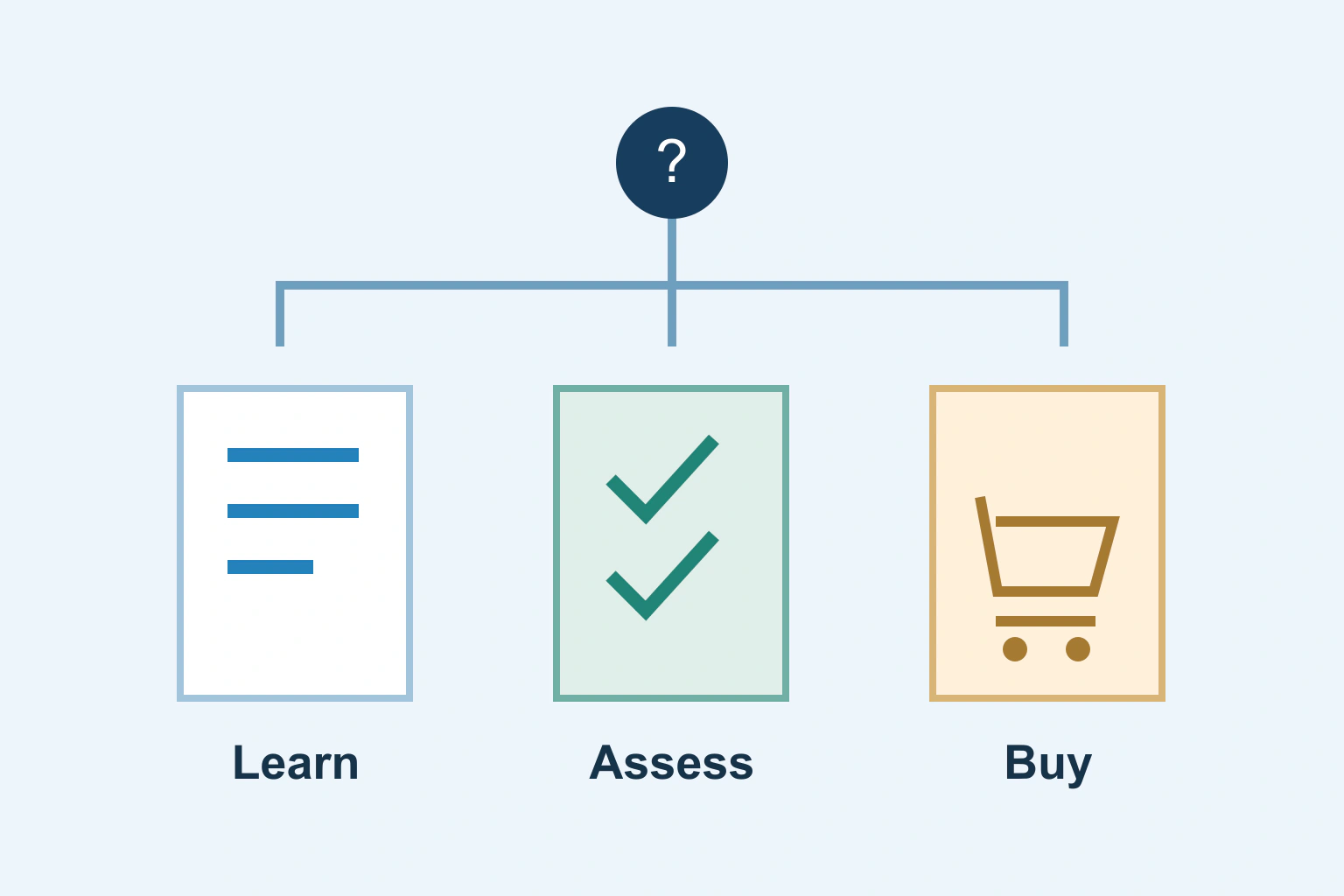
A blog article is not the right destination for every search. Someone learning why a window leaks needs an explanation; someone choosing a repair business needs scope, evidence and a contact route; someone buying a replacement seal needs the exact compatible item and offer.
Choose the format by what the visitor needs to complete now. Then connect an appropriate next step without turning every answer into the same sales page.
Write the task before assigning a keyword
Complete this sentence: after reaching this page, the visitor should be able to do this. Use an observable outcome such as assess whether a repair falls within our service area, choose a compatible seal or decide which diagnostic check to try.
A phrase such as window repair can represent several needs. Do not force certainty where the wording is ambiguous. Consider audience context, relevant current search results and observed enquiries before choosing a destination.
Google’s helpful-content guidance emphasizes useful, reliable material for an intended audience. The format choice here is an editorial method for fulfilling that purpose, not a ranking formula or a fixed category assigned to every query.
Give an article a complete explanatory purpose
An article should help the reader understand a problem, compare meaningful possibilities or follow a diagnostic process. It needs a direct answer, evidence, a useful example and limits. A paragraph that postpones every useful detail until a sales call is a poor informational destination.
A fictional repair business could publish an explanation distinguishing surface condensation from moisture between double-glazed panes. It should avoid diagnosing the reader’s particular window without inspection and explain which next decision follows from each possibility.
A relevant service link can help after that distinction is clear. It should not assume every reader lives in the service area or needs an immediate replacement. The explanation should remain useful even when the visitor does not become a customer.
Use a service page to establish fit
A service page explains whether the business can perform the reader’s job. Describe supported work, location or delivery mode, exclusions, process, genuine evidence, pricing basis and the next action. The visitor should understand what making an enquiry commits them to.
For the fictional business, a glazing page could explain which window types it assesses, where it operates and what information a quote requires. If only some problems are supported, state that boundary instead of implying a complete repair service.
Include educational context where it helps the buying decision. Do not bury the actual scope beneath a generic history of glass. A visitor who already knows the problem should be able to assess suitability without working through an unrelated tutorial.
Use a product page for a defined offer
A product page identifies the precise item or configuration, compatibility, amount, availability, delivery conditions and purchase route. Customers need to distinguish versions and understand what the transaction supplies.
A replacement seal therefore needs dimensions or a supported compatibility method, pack quantity and selected price. A polished description of comfortable homes cannot replace those facts. Keep benefits tied to genuine product information rather than inventing guaranteed outcomes.
| Immediate task | Starting format | Completion evidence |
|---|---|---|
| Understand a symptom | Article | Explanation, distinctions and safe next check |
| Choose a suitable provider | Service page | Scope, process, evidence and enquiry route |
| Buy an exact version | Product page | Defined offer and working purchase journey |
| Choose among related items | Category or comparison | Meaningful criteria and links to the actual items |
Some pages combine tasks deliberately. The primary job must remain clear and complete. A comparison earns its place through meaningful selection criteria, not merely by supplying another location for a purchase button.
Connect stages without duplicating the answer
One journey could move from condensation guidance to a glazing service and a quote form. Another could move from seal-compatibility advice to a product family and an exact item. Readers can enter at any stage, so each destination needs to make sense independently.
Google’s ecommerce structure guidance recommends crawlable category-to-product connections rather than relying only on a search box. Use real links with destinations that also make the reader’s next choice understandable.
Before adding a page, compare its completed task with existing material. Our content-audit guide explains how to preserve distinct answers and consolidate genuine overlap. Different title wording alone does not justify two pages promising the same outcome.
Keep the CMS label separate from reader intent
A WordPress post or page is a publishing model. That label does not automatically make content informative, persuasive or useful. Evergreen guidance can be a post, and a service page can change frequently.
The WordPress content-model guide covers archives, fields, templates and maintenance. Decide the reader task first, then choose a model that supports publishing and discovery. Avoid migrating a working resource because someone claims one CMS label ranks better.
This distinction prevents unnecessary technical work. An article may need a clearer opening without a new URL or content type. A real catalog may need inventory and structured product choices that an ordinary article body cannot provide.
Align the page promise and visible headings
W3C’s headings and labels explanation supports describing topic and purpose. Apply that principle to practical headings such as Supported window types or Check the seal dimensions.
The title and description guide helps align the search preview with the destination. A title promising an immediate explanation should not open a page whose only content is a contact form.
Inspect the mobile first screen and full journey. Purpose, useful identity and the appropriate next action should remain understandable when a wide layout becomes one column. A decorative image should not displace the basic offer entirely.
Validate the format through the intended task
Ask someone unfamiliar with the site to use the page. Can they distinguish the symptom, assess service eligibility or identify the right product without the owner’s explanation? Record confusion at that decision before polishing button colours.
Later, interpret observed queries and actions against the page’s purpose. An article answering a question without a purchase is not automatically failing. A product page leaving compatibility unclear requires a different investigation.
Maintain pages around completed reader jobs. Useful internal connections let the site explain, qualify and sell where those actions fit, while preserving a clear reason for every URL to exist.
Sources and verification
Editorial review 2026-10-18. Source check dates are recorded separately. Notes describe what each source supports and its limits.
View sources
- Google: Creating helpful contentChecked Content should add useful original value for an intended audience.
Limits: This framework does not predict rankings or guarantee intent classification. - Google: Ecommerce site structureChecked Crawlable navigation should connect categories and products; search boxes alone are insufficient.
Limits: Structure guidance is not an indexing guarantee. - W3C: Headings and LabelsChecked Descriptive headings and labels clarify topic and purpose.
Limits: Wording alone cannot establish completion of a commercial or informational task.